

For decades, Kaun Banega Crorepati (KBC) has been more than just a quiz show. It was that comforting, cross-border fixture where families in both India and Pakistan gathered around the TV to watch ordinary contestants, under Amitabh Bachchan’s steady gaze, compete for life-changing sums of money. It was a space that felt universal — about knowledge, not nationalism.
But this year’s Independence Day special promo has shattered that image. Instead of universal appeal, KBC is leaning into overt political theatre — and it’s sparked a wave of criticism on both sides of the border.
The promo in question features Bachchan warmly welcoming three decorated women officers to the “hot seat”: Colonel Sofiya Qureshi of the Indian Army, Wing Commander Vyomika Singh of the Indian Air Force, and Commander Prerna Deosthalee of the Indian Navy. They are introduced not just as game show contestants, but as the faces of Operation Sindoor — the Indian military’s retaliatory airstrikes in May on six sites inside Pakistan, including Sialkot, Bahawalpur, and Azad Jammu and Kashmir.
Operation Sindoor, according to Indian officials, was launched in response to the deadly Pahalgam attack, which India blames on Pakistan. Pakistan has repeatedly denied any involvement.
In the promo, each officer takes turns narrating her role. Colonel Qureshi delivers her line with dramatic flair: “Pakistan has been doing this for years. A response was required, which is why Operation Sindoor was planned.” Wing Commander Singh follows up, telling The Indian Express: “From 1:05am to 1:30am, we ended their game.” Commander Deosthalee assures viewers that “targets were destroyed and no civilians were harmed.” Qureshi closes with the punchline: “This is a new India, with a new mindset.”
The studio audience breaks into chants of “Bharat Mata Ki Jai” (Hail, Mother India).
Missing from this celebratory tone is Pakistan’s version of events. The ISPR (Pakistan’s military media wing) claims the airstrikes killed 31 people and injured 57 more — many of them women and children. Pakistan condemned the violation of its sovereignty, denied involvement in the Pahalgam attack, and stated that it downed 25 Indian drones in the aftermath. Pakistani celebrities and commentators slammed the “insensitivity” of turning a deadly operation into televised entertainment.
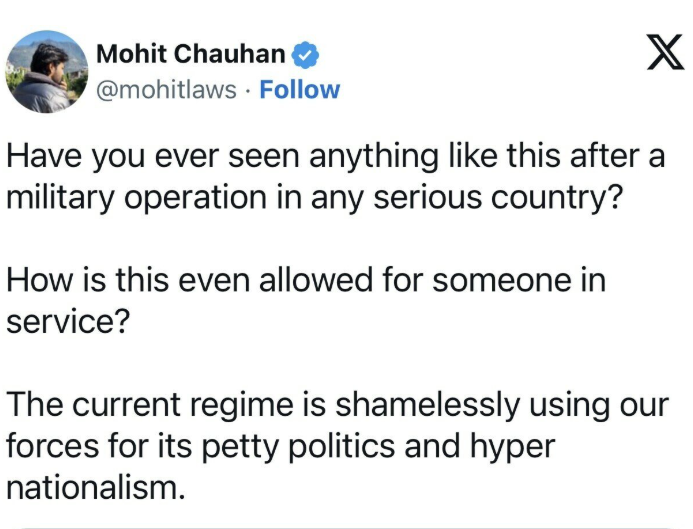
But the backlash hasn’t been limited to Pakistan. In India, many viewers were equally critical — though for different reasons. Social media lit up with questions about the appropriateness of serving military officers appearing on a quiz show, especially in full uniform. Some suggested it may breach military regulations, which traditionally limit how service members participate in public media appearances.
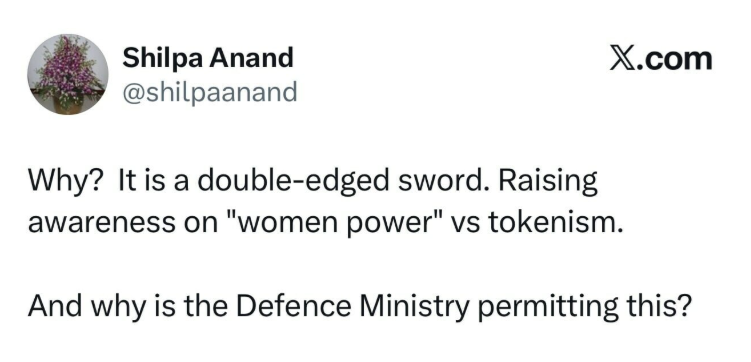
Critics accused the Modi government of using the armed forces as political props, turning one of India’s most iconic entertainment stages into yet another mouthpiece for nationalist messaging. “Why is the Defence Ministry allowing this?” one online poster asked. Others dismissed the segment as tokenism dressed up as empowerment.
One particularly biting comment claimed the women’s real involvement in Operation Sindoor was minimal — “save reading out notes given to them” — and accused the government of “selling imaginary victories” nearly three months after the operation took place.
The timing of the episode’s broadcast — August 15, India’s Independence Day — left little doubt about the symbolism. The move fits neatly into a pattern critics say has been building for years: the Modi government leaning heavily on anti-Pakistan sentiment to rally nationalist pride.
As a political tactic, some found it amusing in its theatricality; others called it “cringe-worthy.” But for long-time viewers of KBC, the disappointment runs deeper. For years, the show felt insulated from political noise. Its drama came from tense quiz rounds, not geopolitical one-upmanship. Viewers tuned in to see schoolteachers, shopkeepers, and students test their knowledge, not to watch the armed forces justify airstrikes.
The shift is part of a broader trend — cultural spaces that once transcended politics are now being pulled into the orbit of state messaging. Whether it’s films, music, sports, or now quiz shows, the line between entertainment and propaganda is blurring fast.
In Modi’s India, the battlefield may be hundreds of miles away, but the war for hearts and minds is happening right in living rooms, through the country’s biggest cultural platforms. KBC, once a shared bridge between audiences in India and Pakistan, has now become another stage for the nationalist narrative.
It’s a reminder of how quickly entertainment can be repurposed — and how hard it is to keep cultural spaces truly neutral when politics is determined to claim them.
For now, the controversy continues to swirl online. Will it hurt KBC’s ratings? Probably not in the short term. But it does raise an uncomfortable question for the future: when the lights go up on the “hot seat,” will we still be watching a quiz show — or just another arm of the state’s messaging machine?

